
Last Updated on April 14, 2026 by Triumphoid Team
Automated lead scoring is having its “gold rush” moment in B2B right now, though not necessarily for the right reasons. Everyone suddenly wants a predictive model, a 1-10 score magically attached to every inbound lead, and a promise that sales will never again waste time on low-intent prospects.
But ignore the hype around plug-and-play “AI scoring engines.” The reality is often messier: most companies don’t have the data hygiene, tech stack maturity, or human resources to maintain a real predictive model. And yet, with the right workflow, you can build something highly effective – even without a data science team.
Let’s dive into the good, the bad, the frustrating, and the genuinely game-changing parts of automated lead scoring, and then walk through a practical, fully functional way to score B2B leads from 1-10 using Make.com and OpenAI before they ever touch your CRM.
The Big Shift: Why Automated Lead Scoring Is Back in Fashion
The shift toward automated lead scoring is driven by two huge pressures: rising acquisition costs and the collapse of traditional qualification frameworks. SDR teams are exhausted, MQL definitions keep shapeshifting, and attribution rarely tells the whole truth. Picture an SDR staring at a long list of inbound leads, each looking identical except for a job title and a generic company domain.

How exactly are they supposed to prioritize? Gut feeling? Excel formulas? “High intent behaviors”?
It’s not scalable.
What changed is the accessibility of AI-driven signals. You no longer need a PhD to interpret patterns. Even small B2B teams can layer enrichment, behavioral triggers, and contextual analysis into a simple automated lead scoring system.
But here’s where I take a firm stance: most automated scoring models fail because companies try to over-engineer them. They fantasize about pipeline predictions while ignoring foundational issues like incomplete enrichment, missing UTM parameters, or inconsistent form fields. Automated lead scoring amplifies good data. It also amplifies mistakes.
The difference between a strategic scoring system and a misleading one comes down to clarity: what do you want the score to mean? If it’s not anchored in revenue outcomes, it’s basically numerology.
The Good and Bad of Automated Lead Scoring
To be frank, the industry talks about AI scoring as if it’s universally transformative. It’s not. Some of the advantages are real and powerful, but so are the pitfalls. Experienced B2B teams feel this tension every day.
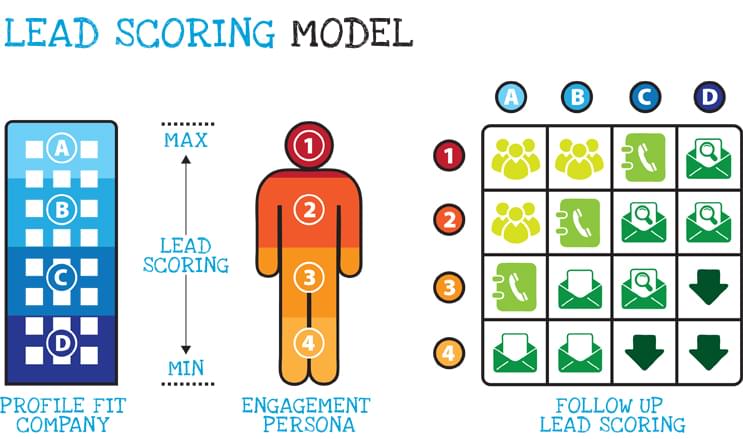
Here’s a quick table to make the contrast painfully clear.
| Aspect | 🔥 The Good | ⚠️ The Bad |
|---|---|---|
| Speed | Instant prioritization for SDRs | Wrong data = wrong score instantly |
| Accuracy | AI detects patterns humans overlook | Bias sneaks in silently and compounds |
| Context | Can interpret tone, intent, and urgency from text | Requires clean, standardized inputs |
| Scalability | Scores every lead 24/7 without fatigue | Hard to debug when scores behave strangely |
| Cost | No need for a data science department | Can become a black box if not designed thoughtfully |
If you’re wondering whether the benefits outweigh the risks, they do – but only with a transparent scoring logic. SDRs don’t trust numbers created in a black box; neither should you.
Why Build It Yourself Instead of Buying Yet Another AI Tool?
Because you don’t need another “smart enrichment platform” that charges enterprise pricing just to produce the same vague lead score every competitor is using. You need something specific to your ICP, your product, and your revenue patterns. Automated lead scoring becomes meaningful only when engineered around:
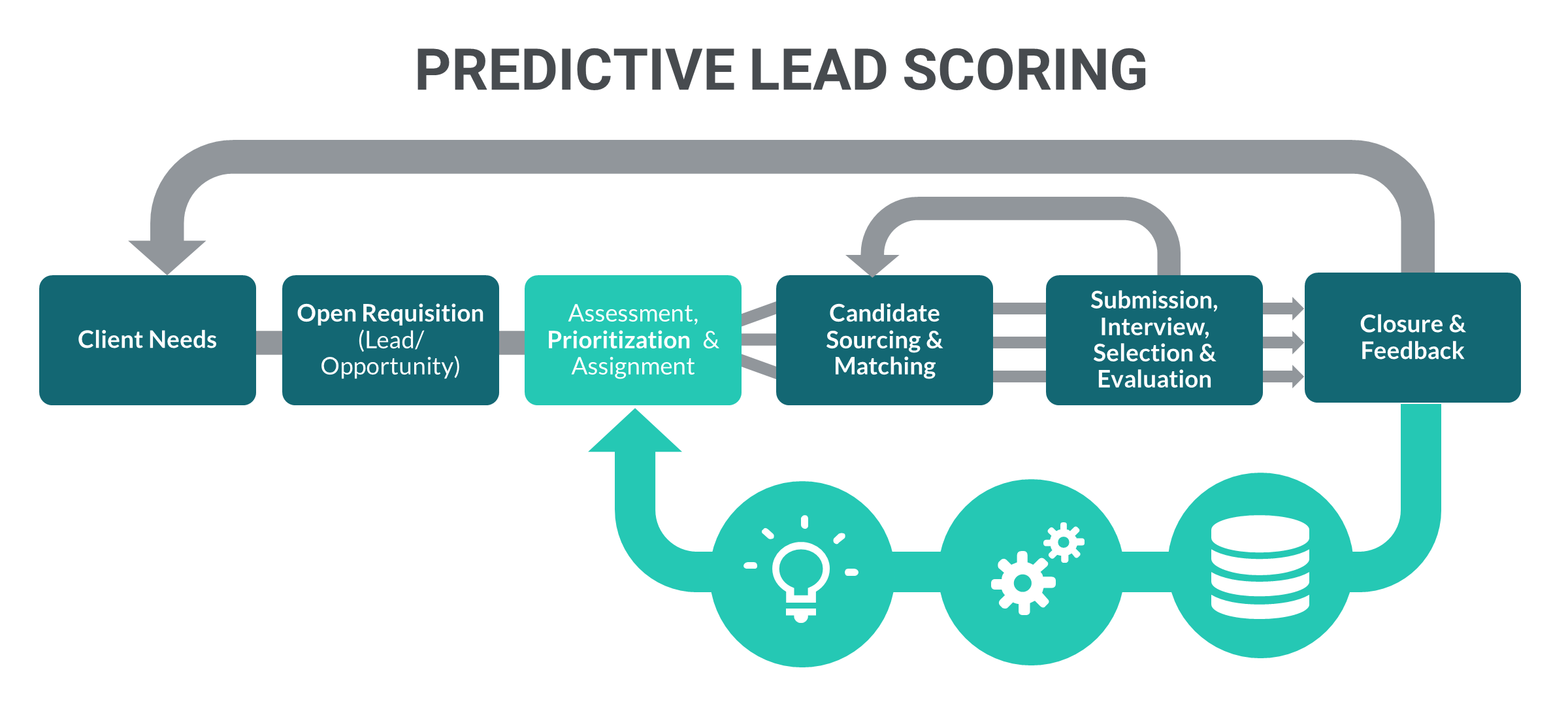
- Your ideal buyer profiles
- Your deal velocity
- Your loss reasons
- Your engagement patterns
- Your actual revenue attribution
Buying a generic “predictive engine” is like buying glasses prescribed for someone else. They might improve things slightly, but never enough.
This is exactly why Make.com + OpenAI workflows are exploding in popularity among lean teams. You get customization, transparency, versioning, and full control… without hiring a data scientist.
Let’s Acknowledge the Elephant in the Room: Most B2B Data Is a Mess
It’s frustrating, isn’t it? You build a model expecting clean inputs, but half your form submissions look like this:
- “Company: Self-employed”
- “Website: google.com”
- “Phone: 111111111”
- “Notes: pls call me maybe”
And your CRM? Full of duplicate records, inconsistent fields, migrations gone wrong, and UTM parameters that only work on paper.
This is precisely why any predictive scoring system must sanitize inputs before scoring. If the model interprets garbage, it will produce something worse than garbage: false confidence.
Good scoring is simply structured judgment applied consistently. Bad scoring is chaos disguised as sophistication.
Why Score Leads Before They Hit CRM?
Because by then, it’s too late. CRMs tend to multiply messiness. Once a bad record enters the system, enrichment tools fight it, SDRs forget to complete fields, and historical analysis becomes unreliable.
Scoring pre-CRM means:
- SDRs see only high-value leads first
- CRM stays cleaner
- Automation triggers stay predictable
- Attribution is preserved
- Lead routing becomes hyper-efficient
It’s surprising how dramatically this improves sales morale. Suddenly they’re not guessing; they’re prioritizing.
Building a Predictive 1-10 Score With Make.com + OpenAI
Here’s where things get practical. Below is the exact workflow structure I’ve used repeatedly, especially for early-stage B2B companies that want an intelligent scoring system without hiring a data team.
Think of this as a blueprint, not a prescription. You’ll adapt it depending on your ICP, industry, and sales motion.
Step 1: Capture the Lead and Trigger the Scenario
Make.com becomes the intercept layer.
Trigger options include:
- A new form submission
- A webhook from your landing page
- A lead created in your marketing automation tool
The moment the lead fires into Make, the data is still untouched, unpolluted, and ready for analysis.
Step 2: Enrich the Lead Automatically (Critical)
No predictive model works without enrichment. Period.
Use whichever enrichment providers you already have (or even free APIs if you’re scrappy). Pull:
- Company size
- Industry
- Location
- Website metadata
- Tech stack (important for SaaS)
- Title seniority
- Email verification
This enrichment shapes the context OpenAI will interpret.
Step 3: Standardize the Inputs
Normalize fields like:
- Job title wording
- Company size ranges
- Country names
- Intent signals (form comments, email interactions, etc.)
- Touchpoint metadata
Why? Because AI models don’t guess well when fed inconsistencies. Your future self will thank you.
Step 4: Send Structured Inputs to OpenAI
This is where the magic actually happens.
The prompt should be strictly structured and include:
- ICP description
- Positive buying signals
- Negative disqualifiers
- Past deal patterns
- Behavioral context
- The enriched lead profile
Then tell AI to return:
- A number from 1-10
- A JSON object with subcomponent scores (e.g., Fit Score, Intent Score, Timing Score)
- A 1-sentence justification for the SDR
The justification matters more than people think. It helps humans trust the score.
Step 5: Validate the Output (Don’t Skip This)
Even the best models hallucinate occasionally. Use Make.com filters to catch:
- Missing data
- Invalid numbers
- Nonsensical responses
When something fails validation, re-score with a fallback prompt or mark as “Needs Review.”
Step 6: Pass Only the Final Score to Your CRM
Now your CRM receives:
- Clean data
- Enriched fields
- A trustable score
- A brief explanation
Routing becomes a dream at this point.
Examples:
- Score 8-10: Immediate SDR call
- Score 5-7: Nurture sequence
- Score 1-4: Tag as low priority
Suddenly your pipeline becomes predictable.
What Makes This System Surprisingly Powerful
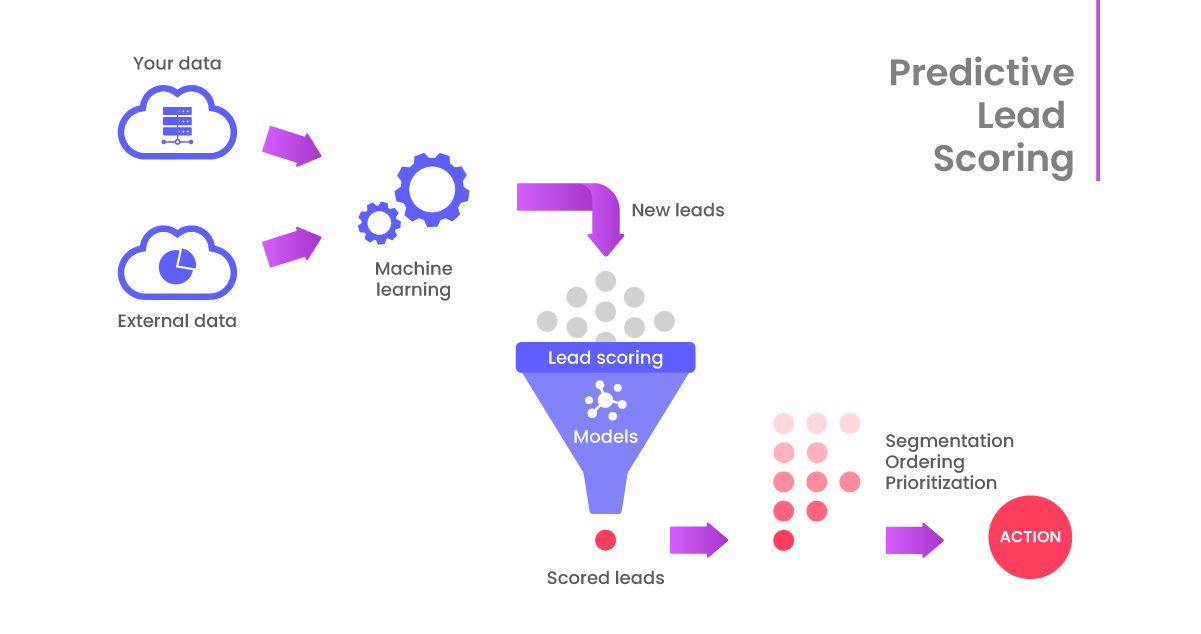
Because you’re not building a “predictive model” in the classical sense. You’re building an adaptive reasoning engine that improves every time you refine your prompts or adjust your scoring criteria.
Each iteration makes the score more aligned with your actual revenue patterns, not generic industry assumptions.
And here’s the kicker: it’s fundamentally more transparent than black-box SaaS scoring engines. You can read the logic. You can adjust it. You can debug it. You control it.
The Dark Side: Where Automated Scoring Can Mislead You
I’ve seen teams sabotage themselves with their own optimism. When automated scoring is wrong, it’s wrong convincingly. AI can sound authoritative even when it’s hallucinating a correlation that doesn’t exist.
The three red flags to watch:
- Over-reliance on job titles
- Ignoring timing or buyer readiness
- Mistaking enrichment data for intent
Have you ever considered how often a VP-level contact turns out to be a completely cold lead, while a mid-level manager is the true buyer champion? Automated scoring misinterprets that all the time when left unsupervised.
A Hypothetical but Painfully Common Scenario
Picture this:
A perfectly enriched lead arrives. Senior title. Ideal industry. Good website. AI assigns it a score of 9. SDR calls… and finds out the contact simply downloaded a PDF for research. No intent whatsoever.
This happens because the AI wasn’t given nuanced behavioral signals – only demographic ones.
Now imagine the reverse:
A modest-looking lead writes a thoughtful message in the form field. AI, properly instructed, picks up urgency, internal alignment, and near-term intent. Score: 8. SDR calls. Deal closes in two weeks.
This is why behavioral context must sit alongside firmographic data. Most vendors oversell firmographics. Context is the real king.
Where Good Scoring Becomes Predictive Revenue
The real value emerges over time. Once you’ve assigned enough 1-10 scores and connected them to revenue outcomes, you can start mapping score → pipeline contribution → win probability.
Even without a data science team, Make.com + OpenAI gives you:
- Lead score accuracy drift detection
- Score-based forecasting
- Automated reassessment logic
- Partner or reseller prioritization
- Tiered SLAs based on predicted value
Your revenue engine becomes smarter simply because your lead flow becomes ordered.
A Final Thought for the Pragmatists
Automated lead scoring isn’t a fantasy anymore. But it’s also not the miracle the industry loves to portray. The truth sits in the middle: it’s a tool that magnifies your operational discipline. Good systems get better. Bad systems collapse faster.
So here’s the real question that every B2B team should be asking:
If your automated scoring system magnified everything you’re doing today, would you be confident in the picture it paints – or would the amplification expose gaps you’ve been ignoring for years?